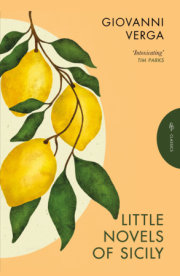
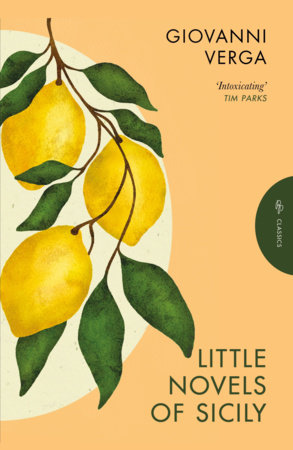
AVAILABLE AGAIN: a highly anticipated new edition of 12 poetically ironic short stories of 19th-century Sicily by a realist master, translated and introduced by D.H. Lawrence.
“Intoxicating... His finest work... How acutely Verga understood the tragic contradictions that still disturb our modern experience.” —New York Review of Books First published in a single volume in 1883, the 12 stories collected in this beautiful new paperback edition are drawn from the Sicily of Giovanni Verga's childhood, reported at the time to be the poorest place in Europe. Verga's style is swift, sure, and implacable; he plunges into his stories almost in midbreath, and tells them with a stark economy of words. There's something dark and tightly coiled at the heart of each story, an ironic, bitter resolution that is belied by the deceptive simplicity of Verga's prose, and Verga strikes just when the reader's not expecting it.
Translator D. H. Lawrence surely found echoes of his own upbringing in Verga's sketches of Sicilian life: the class struggle between property owners and tenants, the relationship between men and the land, and the unsentimental, sometimes startlingly lyric evocation of the landscape.
Just as Lawrence veers between loving and despising the industrial North and its people, so too Verga shifts between affection for and ironic detachment from the superstitious, uneducated, downtrodden working poor of Sicily. If Verga reserves pity for anyone or anything, it is the children and the animals, but he doesn't spare them. In his experience, it is the innocents who suffer first and last and always.
"The Little Novels of Sicily have that sense of the wholeness of life, the spare exuberance, the endless inflections and overtones, and the magnificent and thrilling vitality of major literature." -- The New York Times
"In these stories the whole Sicily of the 1860s lives before us . . . and whether his subject be the brutal bloodshed of an abortive revolution or the simple human comedy that can attend even deep mourning, Verga never loses his complete artistic mastery of his material." --The Times Literary Supplement
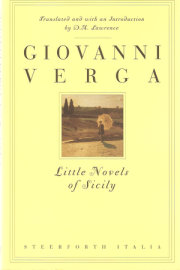
AVAILABLE AGAIN: a highly anticipated new edition of 12 poetically ironic short stories of 19th-century Sicily by a realist master, translated and introduced by D.H. Lawrence.
“Intoxicating... His finest work... How acutely Verga understood the tragic contradictions that still disturb our modern experience.” —New York Review of Books First published in a single volume in 1883, the 12 stories collected in this beautiful new paperback edition are drawn from the Sicily of Giovanni Verga's childhood, reported at the time to be the poorest place in Europe. Verga's style is swift, sure, and implacable; he plunges into his stories almost in midbreath, and tells them with a stark economy of words. There's something dark and tightly coiled at the heart of each story, an ironic, bitter resolution that is belied by the deceptive simplicity of Verga's prose, and Verga strikes just when the reader's not expecting it.
Translator D. H. Lawrence surely found echoes of his own upbringing in Verga's sketches of Sicilian life: the class struggle between property owners and tenants, the relationship between men and the land, and the unsentimental, sometimes startlingly lyric evocation of the landscape.
Just as Lawrence veers between loving and despising the industrial North and its people, so too Verga shifts between affection for and ironic detachment from the superstitious, uneducated, downtrodden working poor of Sicily. If Verga reserves pity for anyone or anything, it is the children and the animals, but he doesn't spare them. In his experience, it is the innocents who suffer first and last and always.
Praise
"The Little Novels of Sicily have that sense of the wholeness of life, the spare exuberance, the endless inflections and overtones, and the magnificent and thrilling vitality of major literature." -- The New York Times
"In these stories the whole Sicily of the 1860s lives before us . . . and whether his subject be the brutal bloodshed of an abortive revolution or the simple human comedy that can attend even deep mourning, Verga never loses his complete artistic mastery of his material." --The Times Literary Supplement