“[W]ith Ironweed, William Kennedy is making American literature.”—The Washington Post Book World
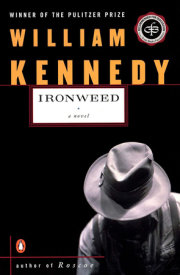
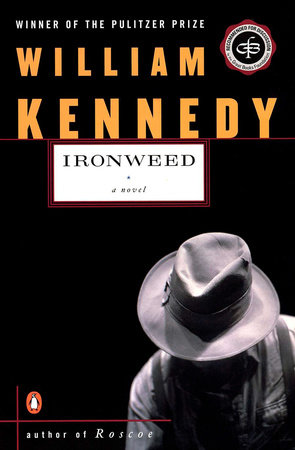
Francis Phelan has hit bottom. More than twenty years ago, the ex-ballplayer, part-time gravedigger, and full-time bum with the gift of gab left Albany after a tragic accident. Now, in 1938, Francis is back in town and faced with the wife and home he abandoned, roaming the old familiar streets, trying to make peace with the ghosts of the past and present. Winner of the Pultizer Prize and the National Book Critics Circle Award for Fiction, Ironweed “goes straight for the throat and the funnybone" (The New York Times).
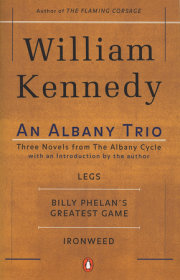
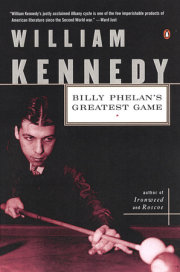
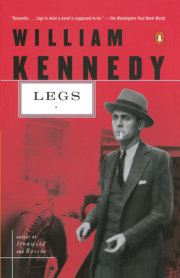
William Kennedy’s Albany Cycle of novels reflect what he once described as the fusion of his imagination with a single place. A native and longtime resident of Albany, New York, his work moves from the mid-nineteenth to the mid-twentieth century, chronicling family life, the city’s netherworld, and its spheres of power—financial, ethnic, political—often among the Irish-Americans who dominated the city in this period. The novels in his cycle include, Legs, Billy Phelan’s Greatest Game, Ironweed, Quinn’s Book, Very Old Bones, The Flaming Corsage, and Roscoe.
WINNER National Book Critics Circle Awards
WINNER Pulitzer Prize (Fiction)
WINNER OF THE PULITZER PRIZE FOR FICTION
Praise for Ironweed
“Rich in plot and dramatic tension...almost Joycean in its variety of rhetoric.”—The New York Times
“Astonishing...Kennedy’s ambitious vision and soaring imaginative powers make this book one of the richest, most startling, and most satisfying novels of recent years.”—The Philadelphia Inquirer
“A beautifully sorrowful novel. Kennedy asks us again to confront the mystery of human behavior. And as he illuminates it, we share in one’s man’s struggle to understand his life.”—The Washington Post
“Kennedy’s power is such that the reader will follow him almost anywhere, to the edge of tragedy and back again to redemption.”—The Wall Street Journal
Praise for William Kennedy
"[A]mong the most exuberant literary feats of the past half-century." —Colum McCann
“Kennedy's justly acclaimed Albany Cycle [is] one of the imperishable products of American literature since the Second World War. These books can be read singly or in sequence, but read they must be. Kennedy is one of our necessary writers.”—GQ
“Kennedy's novels have the rough feel of stories told, not of chapters written and artfully polished. His beguiling yarns are the kind of family myths embellished and retold across a kitchen table late at night, whiskified, raunchy, darkly funny, tangles of old resentments and fresh exasperations.”—TIME
“Kennedy's prose is swift and glib, intent upon creating sparks and surprises, and fully open to life's magical touches, its haunts and ghostly discoveries.”—Chicago Sun-Times
“Kennedy is a writer with something to say, about matters that touch us all, and he does it with uncommon artistry.”—The Washington Post
“William Kennedy writes so melodiously about the Irish ruffians of old Albany, NY he could make Philip Roth wish he were Catholic.”—San Francisco Chronicle
“Kennedy has maintained a high level of achievement throughout [his Albany Cycle], deftly blending comedy and drama as, over the years, he has painted a portrait of a single city perhaps unique in American fiction.”—The Washington Post
“Kennedy has made Albany his, as Dickens made London and Proust Paris and Chandler Los Angeles....One of the finest living American novelists.”—Thomas Flanagan
“[W]ith Ironweed, William Kennedy is making American literature.”—The Washington Post Book World
Francis Phelan has hit bottom. More than twenty years ago, the ex-ballplayer, part-time gravedigger, and full-time bum with the gift of gab left Albany after a tragic accident. Now, in 1938, Francis is back in town and faced with the wife and home he abandoned, roaming the old familiar streets, trying to make peace with the ghosts of the past and present. Winner of the Pultizer Prize and the National Book Critics Circle Award for Fiction, Ironweed “goes straight for the throat and the funnybone" (The New York Times).
William Kennedy’s Albany Cycle of novels reflect what he once described as the fusion of his imagination with a single place. A native and longtime resident of Albany, New York, his work moves from the mid-nineteenth to the mid-twentieth century, chronicling family life, the city’s netherworld, and its spheres of power—financial, ethnic, political—often among the Irish-Americans who dominated the city in this period. The novels in his cycle include, Legs, Billy Phelan’s Greatest Game, Ironweed, Quinn’s Book, Very Old Bones, The Flaming Corsage, and Roscoe.
Awards
WINNER National Book Critics Circle Awards
WINNER Pulitzer Prize (Fiction)
Praise
WINNER OF THE PULITZER PRIZE FOR FICTION
Praise for Ironweed
“Rich in plot and dramatic tension...almost Joycean in its variety of rhetoric.”—The New York Times
“Astonishing...Kennedy’s ambitious vision and soaring imaginative powers make this book one of the richest, most startling, and most satisfying novels of recent years.”—The Philadelphia Inquirer
“A beautifully sorrowful novel. Kennedy asks us again to confront the mystery of human behavior. And as he illuminates it, we share in one’s man’s struggle to understand his life.”—The Washington Post
“Kennedy’s power is such that the reader will follow him almost anywhere, to the edge of tragedy and back again to redemption.”—The Wall Street Journal
Praise for William Kennedy
"[A]mong the most exuberant literary feats of the past half-century." —Colum McCann
“Kennedy's justly acclaimed Albany Cycle [is] one of the imperishable products of American literature since the Second World War. These books can be read singly or in sequence, but read they must be. Kennedy is one of our necessary writers.”—GQ
“Kennedy's novels have the rough feel of stories told, not of chapters written and artfully polished. His beguiling yarns are the kind of family myths embellished and retold across a kitchen table late at night, whiskified, raunchy, darkly funny, tangles of old resentments and fresh exasperations.”—TIME
“Kennedy's prose is swift and glib, intent upon creating sparks and surprises, and fully open to life's magical touches, its haunts and ghostly discoveries.”—Chicago Sun-Times
“Kennedy is a writer with something to say, about matters that touch us all, and he does it with uncommon artistry.”—The Washington Post
“William Kennedy writes so melodiously about the Irish ruffians of old Albany, NY he could make Philip Roth wish he were Catholic.”—San Francisco Chronicle
“Kennedy has maintained a high level of achievement throughout [his Albany Cycle], deftly blending comedy and drama as, over the years, he has painted a portrait of a single city perhaps unique in American fiction.”—The Washington Post
“Kennedy has made Albany his, as Dickens made London and Proust Paris and Chandler Los Angeles....One of the finest living American novelists.”—Thomas Flanagan