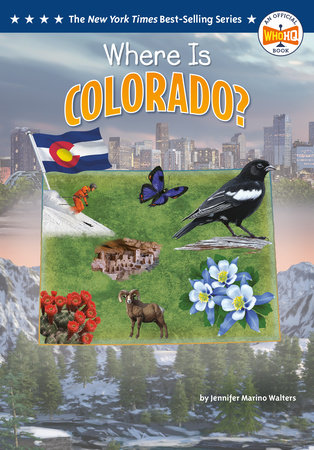
Where Is Colorado?

Illustrated by Ted Hammond
$5.99 US
Penguin Young Readers | Penguin Workshop
144 per carton
On sale Jun 02, 2026 | 9798217244164
Age 8-12 years
Reading Level: Lexile 1070L
Sales rights: World

See Additional Formats
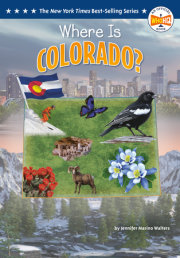
Dive into the history, geography, and culture of Colorado in this installment of the 50 States series. From major cities to historic events, Where Is Colorado? introduces you to the state in a whole new way, whether you’re proud to call it home or learning about a distant destination.


Visit famous landmarks like the Mesa Verde cliff dwellings. Meet the woman who wrote the lyrics to “American the Beautiful” after seeing the Colorado mountains. Read about the many Indigenous peoples who have lived in Colorado for generations. Fans of sports, nature, and weird facts will all find something to love about the home of the highest auto tunnel in the world and an Olympic training facility. Not to mention the gold rush that led to the founding of Denver, the Mile High City!

Including timelines, black-and-white illustrations, and a fact-filled “At a Glance” section, this book has everything you need to know about the heritage, development, and present day of Colorado.
Where Is Colorado?

It was the summer of 1893. Katharine Lee Bates, a poet and professor at Wellesley College in Massachusetts, traveled to Colorado Springs. She would spend a few weeks there teaching English. One day, she and a group of fellow teachers rode a wagon to the summit of Pikes Peak. This famous mountain in the Rockies had already become a symbol of the American West.

Bates was in awe of the views from the peak. From its top, she could look out over the prairie grasses and wheat fields of Kansas! When she got back to her hotel, Bates wrote a poem. The first few lines, inspired by Pikes Peak, are as follows:
O beautiful for spacious skies,
For amber waves of grain,
For purple mountain majesties
Above the fruited plain!

Bates’s poem was later set to music. It became the song “America the Beautiful.” Colorado’s mountains, and the land surrounding them, are still remembered through the song. They’re a part of what many people picture when they think of Colorado today.

About

Dive into the history, geography, and culture of Colorado in this installment of the 50 States series. From major cities to historic events, Where Is Colorado? introduces you to the state in a whole new way, whether you’re proud to call it home or learning about a distant destination.

Visit famous landmarks like the Mesa Verde cliff dwellings. Meet the woman who wrote the lyrics to “American the Beautiful” after seeing the Colorado mountains. Read about the many Indigenous peoples who have lived in Colorado for generations. Fans of sports, nature, and weird facts will all find something to love about the home of the highest auto tunnel in the world and an Olympic training facility. Not to mention the gold rush that led to the founding of Denver, the Mile High City!

Including timelines, black-and-white illustrations, and a fact-filled “At a Glance” section, this book has everything you need to know about the heritage, development, and present day of Colorado.

Excerpt

Where Is Colorado?

It was the summer of 1893. Katharine Lee Bates, a poet and professor at Wellesley College in Massachusetts, traveled to Colorado Springs. She would spend a few weeks there teaching English. One day, she and a group of fellow teachers rode a wagon to the summit of Pikes Peak. This famous mountain in the Rockies had already become a symbol of the American West.

Bates was in awe of the views from the peak. From its top, she could look out over the prairie grasses and wheat fields of Kansas! When she got back to her hotel, Bates wrote a poem. The first few lines, inspired by Pikes Peak, are as follows:
O beautiful for spacious skies,
For amber waves of grain,
For purple mountain majesties
Above the fruited plain!

Bates’s poem was later set to music. It became the song “America the Beautiful.” Colorado’s mountains, and the land surrounding them, are still remembered through the song. They’re a part of what many people picture when they think of Colorado today.