An elegant, iridescent mosaic of autobiographical fragments, both real and invented, forming a portrait of a creative life, from the life of the Pulitzer Prize finalist for Same Bed Different Dreams
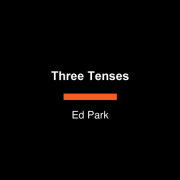
In 1998, Ed Park wrote a memoir and saved it to the vanishing technology of the floppy disk, losing it for more than twenty years. Until one day, emptying out an old, unmarked box in his family’s cramped New York City home, he came across a hefty manila folder. Out slid the only remaining copy of Three Tenses.
The piece of writing that Park found—“a voice lesson, a language experiment, an autobiography with lies, a document of sustained artistic bliss of a sort that I have never found again”—was an assemblage of beguiling anecdotes, sly observations, and collected esoterica, produced within the confines of the shoebox apartment of his twenties and only now allowed to see the light of day. Two Ed Parks emerge on the page: within the prose of the young, struggling writer arises the voice of the artist he would become.
Profound, wily, and beautifully wrought, Three Tenses is a meeting of memory and myth, confession and obfuscation, coalescing to offer a singular picture of creativity in action.
Praise for Three Tenses
“Stray musings and recollections reveal a writer’s restless mind in this scintillating memoir. . . . Ruminations and insights . . . coalesce to illuminate his endlessly curious, mordantly funny worldview. It adds up to an engrossing and beguiling trip through the consciousness of a budding wordsmith.”—Publishers Weekly, starred review
Praise for Ed Park
“Wonderfully suspenseful, like watching a circus performer juggle a dozen torches . . . Park seeks to encompass the vast Korean diaspora, but he’s also fleeing realism, a personal diaspora, away from conventional forms. . . . Sprawling, stunning.”—The New York Times Book Review
“By turns tongue-in-cheek, elegiac, dreamlike and magical-realist . . . an ode to imagination.”—The Washington Post
“A palpable joy on the page . . . Irony has never had it so good.”—Los Angeles Times
“Ingeniously plotted, astoundingly original, and often wickedly funny . . . a singular work from a singular mind.”—Esquire
“A cocktail of his obsessions: experimental language, pop-culture oddities, screwball characters, cutting-edge technologies, and political conflicts across the globe. Yet he’s a poet of the heart as well as an intellectual archivist, his commitment to art captured in inventive forms.”—Time
“Rich with errant wordplay, historical high jinks, and a fixation on the clandestine and conspiratorial.”—The New York Review of Books
“A merry prankster who sees straight to the core of our humanity.”—The Boston Globe
An elegant, iridescent mosaic of autobiographical fragments, both real and invented, forming a portrait of a creative life, from the life of the Pulitzer Prize finalist for Same Bed Different Dreams
In 1998, Ed Park wrote a memoir and saved it to the vanishing technology of the floppy disk, losing it for more than twenty years. Until one day, emptying out an old, unmarked box in his family’s cramped New York City home, he came across a hefty manila folder. Out slid the only remaining copy of Three Tenses.
The piece of writing that Park found—“a voice lesson, a language experiment, an autobiography with lies, a document of sustained artistic bliss of a sort that I have never found again”—was an assemblage of beguiling anecdotes, sly observations, and collected esoterica, produced within the confines of the shoebox apartment of his twenties and only now allowed to see the light of day. Two Ed Parks emerge on the page: within the prose of the young, struggling writer arises the voice of the artist he would become.
Profound, wily, and beautifully wrought, Three Tenses is a meeting of memory and myth, confession and obfuscation, coalescing to offer a singular picture of creativity in action.
Praise
Praise for Three Tenses
“Stray musings and recollections reveal a writer’s restless mind in this scintillating memoir. . . . Ruminations and insights . . . coalesce to illuminate his endlessly curious, mordantly funny worldview. It adds up to an engrossing and beguiling trip through the consciousness of a budding wordsmith.”—Publishers Weekly, starred review
Praise for Ed Park
“Wonderfully suspenseful, like watching a circus performer juggle a dozen torches . . . Park seeks to encompass the vast Korean diaspora, but he’s also fleeing realism, a personal diaspora, away from conventional forms. . . . Sprawling, stunning.”—The New York Times Book Review
“By turns tongue-in-cheek, elegiac, dreamlike and magical-realist . . . an ode to imagination.”—The Washington Post
“A palpable joy on the page . . . Irony has never had it so good.”—Los Angeles Times
“Ingeniously plotted, astoundingly original, and often wickedly funny . . . a singular work from a singular mind.”—Esquire
“A cocktail of his obsessions: experimental language, pop-culture oddities, screwball characters, cutting-edge technologies, and political conflicts across the globe. Yet he’s a poet of the heart as well as an intellectual archivist, his commitment to art captured in inventive forms.”—Time
“Rich with errant wordplay, historical high jinks, and a fixation on the clandestine and conspiratorial.”—The New York Review of Books
“A merry prankster who sees straight to the core of our humanity.”—The Boston Globe