Nest of the Gentry, Virgin Soil

Introduction by Andrew Kahn
Translated by Constance Garnett
Hardcover
$35.00 US
Knopf | Everyman's Library
12 per carton
On sale Apr 14, 2026 | 9798217008278
Sales rights: US, Canada, Open Mkt

A hardcover omnibus from the author of Fathers and Children and First Love--combining the doomed love story that was the most popular of Turgenev’s novels during his lifetime with his final and most ambitious novel, a tragic satire of the naïve idealism of youth

Turgenev's popular 1859 novel has been translated into English under various titles, including House of the Gentlefolk, Home of the Gentry, and A Nobleman’s Nest. Fyodor Lavretsky is a nobleman whose mother was a serf who died when he was young, leaving him to be brought up on his father's country estate by a cruel aunt. Years later, living in Paris, Lavretsky discovers that his beautiful and flirtatious wife has been unfaithful. Broken and disillusioned, he returns to the family estate where he falls in love with a young cousin, Liza, whose simple and serious nature is a contrast to his wife’s. A false report of his wife’s death prompts him to declare his love to Liza, with tragic results for both of them.

Virgin Soil, published in 1877, is both a love story and a bitterly funny social satire. It was inspired by the idealistic youth of 1870s Russia who rejected their lives of privilege to live among "the people,” often hoping to improve the miserable lives of workers. Alexey Nezhdanov, illegitimate son of an aristocrat, is determined to radicalize the peasantry and inspire them to political action. He takes a job at a country estate as a tutor to a politician's child, though his ambitions to effect social change are complicated by his growing love for a niece of his employer’s family.

While both these novels testify to Turgenev’s reputation as the foremost Russian political novelist of the nineteenth century, they are equally remarkable for his ability to render his characters as compellingly vivid individuals struggling to reconcile their ideals with their emotions.

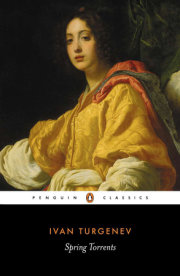
Everyman's Library pursues the highest production standards, printing on acid-free, cream-colored paper, with full-cloth cases with two-color foil stamping, decorative endpapers, silk ribbon markers, European-style half-round spines, and a full-color illustrated jacket. Everyman’s Library Classics include an introduction, a bibliography, and a chronology of the author's life and times.
from the Introduction by Andrew Kahn

Ivan Turgenev’s mature novels breathe the passions of the day. All eight of his major fictions fold the lives of their characters into the struggle to create a different Russia as the country modernized economically and socially. In the 1850s, his subject was the decline of the gentry, the landowning class to which he belonged. Nest of the Gentry glows with a nostalgia for a pastoral Russia. Increasingly from the late 1860s, the prospect of reforms to the Tsarist state overtook the question of the land. Virgin Soil, his last and longest fiction, understands that in politics idealists may struggle to enact change. From the 1860s literature closely engaged with the increasing discontent that bred new generations of activists. From the soft approaches of populist students who went to the people to the radical actions of militant individuals and groups all can be found on the pages of fiction of the period. Turgenev, perhaps most and best of all, saw this as an opportunity to capture new character types as new social and historical forces brought them into being. Most of the revolutionaries he portrays lack action plans, but all feel dissatisfaction with tsarism. The question they address repeatedly is: what must they do?

The classic nineteenth-century novel excelled in representing back to its immediate readership the all the fractious spirit of their age. For all Turgenev’s satisfyingly detailed grasp of the world he depicts, Henry James esteemed his attentiveness to character even more than to reality. James chose his words carefully when he called Turgenev a ‘social’ novelist rather than a realist. Turgenev is interested in what his heroes and heroes are like, and no less in what they stand for. In the obituary he wrote for The Atlantic in 1884, James shared a remark Turgenev made to him: namely, that the ‘germ of the story is the representation of certain persons […] whom he wishes to see in action, being sure that such people must do something very special and interesting.’ The remark draws attention to the special quality of the greatest literary characters who embody and transcend types. Turgenev’s imagination came to life in fashioning characters who reflected national characteristics—and the nineteenth century loved to categorize this way—and then endowed with something more universally human. The vision of the relationship between type and subject, or model and hero, is the subject of his celebrated essay “Hamlet and Don Quixote” (1860). Classic dreamers and vacillators were timeless figures in the history of societies no less than in literature. It took the novelist to select and rework these types to capture their re-emergence in specific historical circumstances.
Turgenev was far too subtle a student of human nature to believe that characters in real life or in literature could ever conform entirely to categorical definitions or plot their lives successfully according to a plan. For one thing, his most poignant and powerful characters are usually in a state of becoming and not just being. His powers to endow this class of fictional protagonists with moral growth through trials and passions, of a personal and social and political kind, is at its finest in Nest of the Gentry (1859) and Virgin Soil (1877). That human capacity his characters display was not a uniform expectation of literary fiction among Russian writers. More tendentious writers such as Nikolai Chernyshevsky believed that the purpose of art was to create models that would transform readers into rational subjects capable of achieving, and living in, utopia. Petr Tkachev, a violence-oriented populist, regarded Chernyshevsky’s What Is to Be Done? as the “gospel of the movement.” Convinced, as was Dostoevsky, that this conceptualization of nature was grossly reductive, Turgenev attacked it head on in the figure of Bazarov, the hero of Fathers and Sons (1862), whose attempt to be purely scientific fails and falls calamitously in love; other novels, including Nest of the Gentry and Virgin Soil, continue to study the fallibility of emotions and illusions.

A man of liberal mind, as a writer Turgenev had a strong feeling for the value of art as its own creative reality. The French critic Emile Hennequin put it nicely in 1889 when he wrote that Turgenev knew the ‘particular individual and not man in general.’ His method was to base characters on people he studied. In other words, for all that they serve as representative of types they can also be remarkably individual and most compelling when struggling to reconcile their commitment to ideals and their personal choices. The all-important larger national context, its class division and intergenerational tension about serfdom and emancipation, women and education, autocracy and freedom, literature and ideology, is the stuff of their lives and conversations. The roundedness that exceeds type is also an effect of how Turgenev handles individual and group interaction in the prosaic settings of daily life.

About

A hardcover omnibus from the author of Fathers and Children and First Love--combining the doomed love story that was the most popular of Turgenev’s novels during his lifetime with his final and most ambitious novel, a tragic satire of the naïve idealism of youth

Turgenev's popular 1859 novel has been translated into English under various titles, including House of the Gentlefolk, Home of the Gentry, and A Nobleman’s Nest. Fyodor Lavretsky is a nobleman whose mother was a serf who died when he was young, leaving him to be brought up on his father's country estate by a cruel aunt. Years later, living in Paris, Lavretsky discovers that his beautiful and flirtatious wife has been unfaithful. Broken and disillusioned, he returns to the family estate where he falls in love with a young cousin, Liza, whose simple and serious nature is a contrast to his wife’s. A false report of his wife’s death prompts him to declare his love to Liza, with tragic results for both of them.

Virgin Soil, published in 1877, is both a love story and a bitterly funny social satire. It was inspired by the idealistic youth of 1870s Russia who rejected their lives of privilege to live among "the people,” often hoping to improve the miserable lives of workers. Alexey Nezhdanov, illegitimate son of an aristocrat, is determined to radicalize the peasantry and inspire them to political action. He takes a job at a country estate as a tutor to a politician's child, though his ambitions to effect social change are complicated by his growing love for a niece of his employer’s family.

While both these novels testify to Turgenev’s reputation as the foremost Russian political novelist of the nineteenth century, they are equally remarkable for his ability to render his characters as compellingly vivid individuals struggling to reconcile their ideals with their emotions.

Everyman's Library pursues the highest production standards, printing on acid-free, cream-colored paper, with full-cloth cases with two-color foil stamping, decorative endpapers, silk ribbon markers, European-style half-round spines, and a full-color illustrated jacket. Everyman’s Library Classics include an introduction, a bibliography, and a chronology of the author's life and times.

Excerpt

from the Introduction by Andrew Kahn

Ivan Turgenev’s mature novels breathe the passions of the day. All eight of his major fictions fold the lives of their characters into the struggle to create a different Russia as the country modernized economically and socially. In the 1850s, his subject was the decline of the gentry, the landowning class to which he belonged. Nest of the Gentry glows with a nostalgia for a pastoral Russia. Increasingly from the late 1860s, the prospect of reforms to the Tsarist state overtook the question of the land. Virgin Soil, his last and longest fiction, understands that in politics idealists may struggle to enact change. From the 1860s literature closely engaged with the increasing discontent that bred new generations of activists. From the soft approaches of populist students who went to the people to the radical actions of militant individuals and groups all can be found on the pages of fiction of the period. Turgenev, perhaps most and best of all, saw this as an opportunity to capture new character types as new social and historical forces brought them into being. Most of the revolutionaries he portrays lack action plans, but all feel dissatisfaction with tsarism. The question they address repeatedly is: what must they do?

The classic nineteenth-century novel excelled in representing back to its immediate readership the all the fractious spirit of their age. For all Turgenev’s satisfyingly detailed grasp of the world he depicts, Henry James esteemed his attentiveness to character even more than to reality. James chose his words carefully when he called Turgenev a ‘social’ novelist rather than a realist. Turgenev is interested in what his heroes and heroes are like, and no less in what they stand for. In the obituary he wrote for The Atlantic in 1884, James shared a remark Turgenev made to him: namely, that the ‘germ of the story is the representation of certain persons […] whom he wishes to see in action, being sure that such people must do something very special and interesting.’ The remark draws attention to the special quality of the greatest literary characters who embody and transcend types. Turgenev’s imagination came to life in fashioning characters who reflected national characteristics—and the nineteenth century loved to categorize this way—and then endowed with something more universally human. The vision of the relationship between type and subject, or model and hero, is the subject of his celebrated essay “Hamlet and Don Quixote” (1860). Classic dreamers and vacillators were timeless figures in the history of societies no less than in literature. It took the novelist to select and rework these types to capture their re-emergence in specific historical circumstances.
Turgenev was far too subtle a student of human nature to believe that characters in real life or in literature could ever conform entirely to categorical definitions or plot their lives successfully according to a plan. For one thing, his most poignant and powerful characters are usually in a state of becoming and not just being. His powers to endow this class of fictional protagonists with moral growth through trials and passions, of a personal and social and political kind, is at its finest in Nest of the Gentry (1859) and Virgin Soil (1877). That human capacity his characters display was not a uniform expectation of literary fiction among Russian writers. More tendentious writers such as Nikolai Chernyshevsky believed that the purpose of art was to create models that would transform readers into rational subjects capable of achieving, and living in, utopia. Petr Tkachev, a violence-oriented populist, regarded Chernyshevsky’s What Is to Be Done? as the “gospel of the movement.” Convinced, as was Dostoevsky, that this conceptualization of nature was grossly reductive, Turgenev attacked it head on in the figure of Bazarov, the hero of Fathers and Sons (1862), whose attempt to be purely scientific fails and falls calamitously in love; other novels, including Nest of the Gentry and Virgin Soil, continue to study the fallibility of emotions and illusions.

A man of liberal mind, as a writer Turgenev had a strong feeling for the value of art as its own creative reality. The French critic Emile Hennequin put it nicely in 1889 when he wrote that Turgenev knew the ‘particular individual and not man in general.’ His method was to base characters on people he studied. In other words, for all that they serve as representative of types they can also be remarkably individual and most compelling when struggling to reconcile their commitment to ideals and their personal choices. The all-important larger national context, its class division and intergenerational tension about serfdom and emancipation, women and education, autocracy and freedom, literature and ideology, is the stuff of their lives and conversations. The roundedness that exceeds type is also an effect of how Turgenev handles individual and group interaction in the prosaic settings of daily life.