Sounds of Trash

Part of Steamworks

Illustrated by Neha Rawat
Ebook (EPUB FXL CPB)
$6.99 US
Charlesbridge
On sale Aug 04, 2026 | 9781632894786
Age 4-7 years
Sales rights: World

See Additional Formats
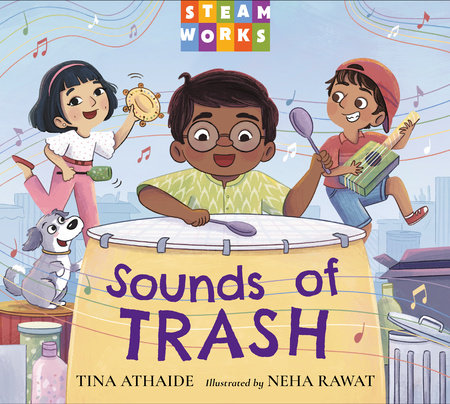
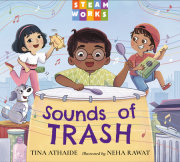
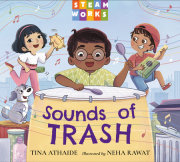
Join Pran and his friends in an exploration of sound and the engineering design process, because STEAM is everywhere and for everyone!

Part of STEAMWORKS, a series of fiction picture books for ages 4-7 that relate science, technology, engineering, arts, and math (STEAM) to kids’ everyday lives.


When Pran and his friends learn that the neighborhood block party is moved to the park where it won’t have music, they are determined to find a way for it to be part of the celebration. After some trial and error, and more than a few prototypes made from recyclables, they are ready to engineer their way to a jazzy, bhangra-filled day!

Extend the learning beyond the story with expertly crafted back matter, including additional information about sound and the engineering design process and fun STEAM activities.

STEAMWORKS features children of all backgrounds and abilities using scientific and mathematical thinking to solve everyday problems and answer questions that matter to them. Playful stories and extension activities ignite excitement for science, technology, engineering, arts, and math (STEAM) and empower children as thinkers, problem solvers, and innovators.

STEAMWORKS picture books are also available in Spanish. The Spanish title is Sonidos de basura.
DIY saves the day in Athaide and Rawat’s upbeat STEAM story. When it’s announced that a community block party will be moved to a venue that lacks power, a trio of children lament “No electricity meant no booming bhangra beats” until an elder suggests they solve the problem themselves. Evenly paced storytelling traces the kids’ day-by-day process as they orchestrate a plan to create their own instruments. After brainstorming and sketching, they repurpose recyclables into shakers (“Raúl poured pebbles into coffee tins. They rattled”), drums (“Mira’s shredded-paper brushes rustled”), and sitars (“Pran’s sitar TWANGED and VIBRATED”). Coupled with contributions from inspired neighbors, the results make for an event marked by “a marvelous mash, all these sounds made from trash.” Employing muted coloring, digital cartooning incorporates music notes and prototype schematics throughout an enthusiastic tale of invention that eagerly highlights creative problem-solving. A Spanish-language edition publishes simultaneously. Characters are portrayed with various abilities and skin tones. Back matter includes a design-process workflow.
Publishers Weekly

A diverse trio of kids recycles and experiments to create instruments that will enliven the community block party. Pran, Raul, and Mira make lists and sketches and brainstorm the materials required to make their instruments. They gather supplies from other people’s trash and assemble shakers, drums, and stringed (rubber-banded) music makers from different materials that produce different sounds. Their industriousness is observed by neighbors, who are inspired to make their own instruments for what turns out to be a rocking block party. This simple story, told economically and descriptively, neatly encourages recycling while demonstrating the engineering design process. Digitally created cartoon illustrations capture the kids’ enthusiasm and the many iterations in their planning process. They show that the project is doable and within the capabilities of the intended audience. Back matter includes a glossary, information about sound and the design process, and additional sound-related activities. VERDICT A useful resource for lessons on recycling and problem-solving; this will inspire readers who like crafts or making music.
—School Library Journal

Classroom Activities for Sounds of Trash

Classroom activities supplement discussion and traditional lessons with group projects and creative tasks. Can be used in pre-existing units and lessons, or as stand-alone.

(Please note: the guide displayed here is the most recently uploaded version; while unlikely, any page citation discrepancies between the guide and book is likely due to pagination differences between a book’s different formats.)
About

Join Pran and his friends in an exploration of sound and the engineering design process, because STEAM is everywhere and for everyone!

Part of STEAMWORKS, a series of fiction picture books for ages 4-7 that relate science, technology, engineering, arts, and math (STEAM) to kids’ everyday lives.


When Pran and his friends learn that the neighborhood block party is moved to the park where it won’t have music, they are determined to find a way for it to be part of the celebration. After some trial and error, and more than a few prototypes made from recyclables, they are ready to engineer their way to a jazzy, bhangra-filled day!

Extend the learning beyond the story with expertly crafted back matter, including additional information about sound and the engineering design process and fun STEAM activities.

STEAMWORKS features children of all backgrounds and abilities using scientific and mathematical thinking to solve everyday problems and answer questions that matter to them. Playful stories and extension activities ignite excitement for science, technology, engineering, arts, and math (STEAM) and empower children as thinkers, problem solvers, and innovators.

STEAMWORKS picture books are also available in Spanish. The Spanish title is Sonidos de basura.

Praise

DIY saves the day in Athaide and Rawat’s upbeat STEAM story. When it’s announced that a community block party will be moved to a venue that lacks power, a trio of children lament “No electricity meant no booming bhangra beats” until an elder suggests they solve the problem themselves. Evenly paced storytelling traces the kids’ day-by-day process as they orchestrate a plan to create their own instruments. After brainstorming and sketching, they repurpose recyclables into shakers (“Raúl poured pebbles into coffee tins. They rattled”), drums (“Mira’s shredded-paper brushes rustled”), and sitars (“Pran’s sitar TWANGED and VIBRATED”). Coupled with contributions from inspired neighbors, the results make for an event marked by “a marvelous mash, all these sounds made from trash.” Employing muted coloring, digital cartooning incorporates music notes and prototype schematics throughout an enthusiastic tale of invention that eagerly highlights creative problem-solving. A Spanish-language edition publishes simultaneously. Characters are portrayed with various abilities and skin tones. Back matter includes a design-process workflow.
Publishers Weekly

A diverse trio of kids recycles and experiments to create instruments that will enliven the community block party. Pran, Raul, and Mira make lists and sketches and brainstorm the materials required to make their instruments. They gather supplies from other people’s trash and assemble shakers, drums, and stringed (rubber-banded) music makers from different materials that produce different sounds. Their industriousness is observed by neighbors, who are inspired to make their own instruments for what turns out to be a rocking block party. This simple story, told economically and descriptively, neatly encourages recycling while demonstrating the engineering design process. Digitally created cartoon illustrations capture the kids’ enthusiasm and the many iterations in their planning process. They show that the project is doable and within the capabilities of the intended audience. Back matter includes a glossary, information about sound and the design process, and additional sound-related activities. VERDICT A useful resource for lessons on recycling and problem-solving; this will inspire readers who like crafts or making music.
—School Library Journal

Guides

Classroom Activities for Sounds of Trash

Classroom activities supplement discussion and traditional lessons with group projects and creative tasks. Can be used in pre-existing units and lessons, or as stand-alone.

(Please note: the guide displayed here is the most recently uploaded version; while unlikely, any page citation discrepancies between the guide and book is likely due to pagination differences between a book’s different formats.)