from the Introduction by Patrick Marnham
V. S. Naipaul lived in Africa for just nine months. He subsequently set three of his novels in fictional African countries and his last book was the account of a journey in search of African belief.
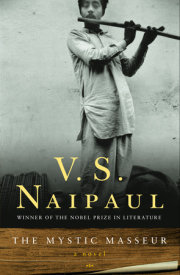
In 1950, at the age of 18, he had left his home in Trinidad to read English at University College, Oxford, and he did not return home for six years. He never lived in Trinidad again. After university he was offered a job, with the BBC Colonial Service and it was then that his first novel
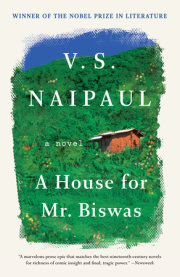
The Mystic Masseur was published. In 1961 he won an international reputation with what he called his “breakthrough book”,
A House for Mr Biswas, a comic tour de force set in Port of Spain where he had grown up. After that he abandoned the Caribbean background, finding it too narrow, and most of his subsequent writing was inspired by his journeys in Latin America, India and Africa, in search of what he called “the great world”. His connection with Africa had come by chance - part of his “luck” as he termed it. In 1966 he had been offered a position as writer in residence at Makerere University in Uganda, then one of the leading universities on the African continent.
Uganda four years after independence still had a bright future. It was regarded as a ‘developing society’, but it had preserved a superficially coherent ruling structure. In many African countries the move from colony to sovereign state, often accompanied by insurrection and bloodshed, had been too rapid. The continent was in a state of chaotic transition. Whereas some countries such as Senegal and the Ivory Coast were peaceful and reasonably prosperous, others were already on the point of collapse. Naipaul arrived in Kampala at a critical moment. Within weeks the prime minister of Uganda, Milton Obote, staged a coup and declared himself to be the executive president. In the fighting that followed over a thousand people were killed. Makerere continued to function but Naipaul was appalled by what he described as the international community’s “castrated reaction” to the violence. Obote - who had been educated by Protestant missionaries and was a university graduate – was regarded by the political scientists and international analysts as a potentially progressive influence. Naipaul immediately saw him for what he was, a brutal despot, and was angered by the African experts’ ready endorsement of the new regime.
Towards the end of his year at Makerere, on a trip through Rwanda to the Congo border, Naipaul had a glimpse of the devastation left by the long-fought conflicts that had followed Congolese Independence in 1960. In an uprising known as the “Simba rebellion”, in August 1964, a rebel army had appeared out of the forest and occupied about one-third of the Congo taking the regional capital of Stanleyville. 2500 government supporters had been massacred in the town centre and over 2000 European residents were held hostage. The ‘Simba’ warriors were often armed with little more than magic amulets and drugs, but they believed themselves invincible. In the bush white people were hunted down and systematically killed. Nuns were raped and murdered, missionaries were tortured and chopped to pieces. It took an international force of mercenaries armed with jet fighter and bombers and Belgian paratroopers to free the hostages, many of whom died. The ‘Simbas’, still believing in their magic, melted away into the forest, sometimes taking refuge in either Rwanda or Uganda. The horror was still fresh in people’s minds when Naipaul set off on his tour.
One day he came across a place called Gisenyi, on the shores of Lake Kivu. This had been a holiday resort for prosperous Europeans. But in the tribal fighting that followed Rwandan independence this place too had been destroyed. The entire town had collapsed and was returning to bush. Naipaul noticed that despite this it was still inhabited. People were crouched in the shadows “trying to recreate the hut life” within the wreckage of modern bungalows. For Naipaul “all writing has an element of discovery and the unexpected”. When he left Uganda the “unexpected” detail that continued to disturb him was the sight of those people living in huts inside the bungalows. It had never occurred to him that such a thing could happen. The shock remained and the scene would emerge from his memory 13 years later and become part of the inspiration for what many believe is his greatest work.
A Bend in the River was written in a very specific political context, but it was not the first novel he set in Africa.
**
In January 1971 President Obote, who had by then created a secret police force - which he called the ‘Public Safety Unit’ - and had used torture and murder to support his dictatorship, was overthrown by one of his army officers, an uneducated part-time gold smuggler named Idi Amin. Later that year Naipaul published In A Free State, which describes the flight of two Europeans through a central African country in a state of insurrection. It was his first fictional excursion into the realities of Africa’s growing post-colonial crisis.
The novel won the Booker Prize but not universal approval. Some liberal or left-wing readers regarded Naipaul’s depiction of Africa as reactionary and ‘racist’. Another writer might have been disturbed by the allegation. Naipaul remained unperturbed. He had not engaged in this high calling in order to recycle familiar cant. In his own words he was not interested in “telling his readers what they already knew”. In any event the criticisms soon lost their sting. One year after the book was published Idi Amin expelled thousands of Uganda’s Asian citizens and expropriated their property. His rule was proving to be even more brutal, and far more racist, than Obote’s. He had created a second murder squad, the ‘Bureau of State Research’. As Amin’s reign of terror developed the British government - which may have been involved in planning the coup that brought him to power – continued, together with France and Israel, to offer him aid and military support. For observers of Uganda, In a Free State had acquired the additional value of reportage. The overwhelming atmosphere of menace had been accurately evoked by Naipaul a year earlier.
Three years later, visiting Kampala in 1974, I saw how that same fear had come to dominate people’s lives. By this time Amin had dismissed the British and the Israelis and replaced them with Colonel Gadhafi and the PLO. The East German mission, led by Gottfried Lessing, first husband of Doris Lessing, had become responsible for the Bureau of State Affairs. And Amin had become more unpredictable than ever. My first call was on the Permanent Secretary at the Ministry of Internal Affairs. He was furious that I had been admitted to the country. Who had let me in? He was not soothed when he discovered that the English official who had authorised my journey had already been deported. He had been forced to board the plane I had arrived on.
The Permanent Secretary was having a bad time. He was a highly educated civil servant who was being publicly humiliated by the new Minister, a semi-literate army sergeant from the same region as President Amin. But when I eventually met the Minister, I realised that he was just as frightened as his Permanent Secretary. While I was sitting in his office he telephoned to Amin and when the call was put through he held the receiver in the tips of his fingers as though it was made of ice. His eyes widened while he listened, and when he spoke it was very quietly indeed. The words he used most often were “Yes, Effendi. Yes Effendi”. * [*Fn. ‘Effendi’ - equivalent to Sergeant-Major in a colonial regiment]. And the fear was just as great among the expatriates. When I visited a Scottish professor of surgery in his comfortable villa in Kampala he checked the door and the window for eavesdroppers and told me that we had to speak quietly because he thought his houseboy might be a police spy.
**
A Bend in the River, published in 1979, presents a terrifying vision of life as it is lived in dark corners of the world, beyond the soporific blanket of western affluence. It is set in an imaginary country that strongly resembles the Democratic Republic of the Congo, in the days of President Mobutu. In 1975 Naipaul had returned to Africa and travelled for three months through the land he had glimpsed on that short trip to the ruined towns of Rwanda. The Belgians had proposed a national identity for the people of the forest. Then, quite suddenly, they had left the Congo, and the embryo state they had abandoned, a complex instrument that nobody had been trained to operate, became an empty husk. The new orthodoxy of “Mobutuism”, or “authenticité” offered a way forward, a new security. Naipaul was unimpressed. The long essay he wrote after his visit, ‘A New King for the Congo’ opened with the words, “The Congo which used to be a Belgian colony, is now an African kingdom and is called Zaire. It appears to be a nonsense name….” In it he described Kisangani, formerly Stanleyville, with its decayed hotels and rusting iron barges. Stanleyville was the colonial town that had grown up on the site of Kurtz’s imaginary stockade in Joseph Conrad’s
Heart of Darkness. This is the town which stands today in the centre of Africa on a huge bend in the Congo River and which is the original setting for both novels. In neither book is the country named. In Naipaul’s we are just given “the coast”, “the mountains”, “the forest”, and “the town in the interior at the bend in the great river”.
The story is woven in an intricate pattern that unfolds into three separate narratives. One is that of a colonised country that has been abandoned and is in a state of crisis. The history and politics of the town provide the framework for the lives of Naipaul’s characters but never descend into a polemic. The second narrative describes the daily lives of the town’s inhabitants, men and women enclosed within the heart of a country in crisis. The third deals specifically with the struggle of one character, the narrator Salim, to make sense of his unexpected predicament as a once bright future is destroyed by the surrounding chaos. He is re-living the nightmare of In a Free State but now organised on a much wider canvas divided into four parts.
In Part One, ‘The Second Rebellion’, the political instability that has spread up river from the capital is ended when the President employs white mercenaries to quell a rebellion. A measure of prosperity then returns to the town and Salim is able to reorganise his business. In the second part, ‘The New Domain’, he is invited to meet some of the town’s recently installed elite who are living in a purpose-built university quarter. In the third part, ‘The Big Man’, the policy of authenticité imposed by the President begins to unravel, and his followers realise that this has been built on lies. The concluding part is entitled simply ‘Battle”.
The opening pages describe Salim’s journey from the coast to the town, and his arrival, when he discovers that the place he was expecting to settle in has “ceased to exist”. Salim has been tricked. The friend who persuaded him to leave his own community on the East African coast and buy the dormant trading post set up on the river had failed to mention the town’s advanced state of decay. On his journey from the coast, as he gets closer to his destination Salim has a premonition of what awaits him. The road leading deeper into the forest passes through a disturbed region, between places “full of blood”. Salim thinks, ‘But this is madness. I am going in the wrong direction. There can’t be a new life at the end of this”. He can always buy his way in through successive frontier posts, but he has a strong sense that it will be more difficult to buy his way out.
Salim enters a town that has gone back to bush. Many of the houses have been stripped and then set alight, their European owners having long since fled. The swimming pools have been drained and only the rain water keeps their slime green. In the scrub surrounding the ruined buildings he can make out the concrete shells of what had once been restaurants and night clubs. It is a ghost town and Salim, wandering through it, feels like a ghost “not from the past but from the future”. His warehouse is standing but it is empty.
The town has a history, which is essentially the real history of Kisangani. Arab rulers in search of gold and slaves had come to that region for centuries before the Europeans. The bend in the river had been the meeting point between two competing forms of exploitation. The Arabs had come from the east, the Europeans from the Atlantic. Then the “Arabian energy that had pushed them into Africa had died down at its source, and their power was like the light of a star that travels on after the star itself has become dead…; at the bend in the river there had grown up a European, and not an Arab, town”.
It is this outpost of European civilisation that has in turn disappeared. Looking around at the desolation Salim ponders, “This piece of earth – how many changes had come to it! Forest at a bend in the river, a meeting place, an Arab settlement, a European outpost, a European suburb, a ruin like the ruin of a dead civilization… and now this.” “This” is the next phase in the town’s history - a system based on lies. The town, with the rest of the country, is being misgoverned again, this time by the new ruler, the ‘Big Man’, who unable to continue the colonial project, and unable to return to the pre-colonial society, has decided to pretend that there is a third way, which he dubs “authenticité”. Salim arrives before the new regime has been imposed. He watches it grow in strength and then fall to pieces, “until the lies (the Big Man) started making us all live made the people confused and frightened and, when a fetish stronger than his was found, made them decide to put an end to it all and go back again to the beginning”. . . .
Copyright © 2019 by V. S. Naipaul; Introduction by Patrick Marnham. All rights reserved. No part of this excerpt may be reproduced or reprinted without permission in writing from the publisher.