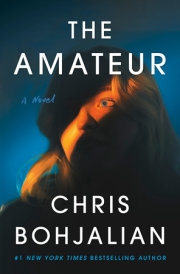
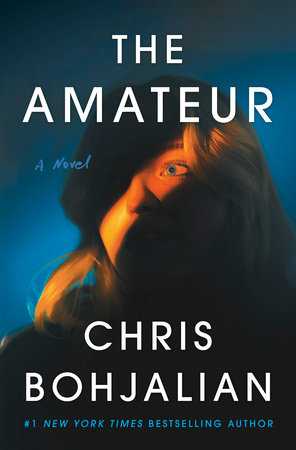
The Amateur

A Novel

Look inside
Best Seller
Hardcover
$33.00 US
Doubleday Publishing | Doubleday
12 per carton
On sale Aug 04, 2026 | 9780385551298
Sales rights: US, Canada, Open Mkt

See Additional Formats
NEW YORK TIMES BESTSELLER • From the #1 New York Times bestselling author of Midwives and The Flight Attendant: When a young woman, a golf prodigy, kills a caddy with a stray ball at the country club, the investigation of this freak accident reveals a dark and shocking tale of secret affairs, predatory men, and a teenager on trial.

1978: It is the first Thursday in August and temperatures are flirting with ninety when Mira Winston, eighteen years old, drives a golf ball from her tee toward the practice net near the clubhouse and caddy shack. The golf ball, weighing 1.6 ounces, tears through the net, traveling 150 miles per hour, and slams, with sickening force, into the temple of a high school junior named Kenny Foster, rupturing an artery and unleashing a torrent of blood. Kenny brings his hand to the side of his head, then topples onto his side. He’s dead before the ambulance even arrives.

In the wake of this terrible accident—and everyone, at first, agrees it was an accident—Mira looks for comfort in all the wrong places: In her lover, Theo Catton, a married man three decades her senior. In her mother, a well-kept woman with secrets of her own. In the dead caddy’s little sisters, girls bewildered by grief. But when the investigators look more closely at the torn net, when a detective recalls Mira’s history of recklessness, and when Kenny’s father spies Mira with her married lover, the affluent and mannered community turns on this once-promising young woman. A gripping story that takes the reader from the sun-soaked greens of a tony Westchester country club to the fluorescent-lit stand of a county courtroom, The Amateur asks: What happens when one small moment—a swing, a ball, a piece of string—changes the course of an entire life?
1

Bad Luck’s Human Conduit

I didn’t go to Yale because, in part, I no longer wanted anything to do with golf, and I associated my acceptance there with the sport. I didn’t have a golf scholarship, but the coach had encouraged me to come to New Haven, assuring me that I would make the team. Had it been a decade later, I might have been actively recruited. But that might be presumption on my part. Maybe I wasn’t quite as extraordinary and rare as I liked to believe. In hindsight, I doubt I was even on the radar of the southern or western universities that took golf—­especially women’s golf—­seriously.

Besides, after Kenny Foster’s death, I was in no condition to study anywhere.


In a tony suburb of New York City in 1978, in a place like Tallmadge, a mere thirty-­five minutes by commuter train from Grand Central, almost all of the houses were colonials, Tudors, and Georgians. The bedroom closet floors were awash in wing tips, penny loafers, and espadrilles. In that world, no one was going to propose therapy to deal with the trauma that comes when you kill someone with a golf ball. If you were a teen back then, the only sure ticket to a shrink was to try to kill yourself, and still your visits to the psychiatrist would be the darkest of family secrets. So, no one suggested that I might benefit from a little talk therapy. It didn’t cross my anguish-­addled mind any more than it crossed my parents’ minds to bring it up. Would my life have turned out differently if I had seen someone? Perhaps. But maybe not. I had plenty of other demons just waiting to emerge from the vault.

For instance, when I was fifteen, three years before I would kill Kenny Foster, I took my father’s nine iron and smashed in the driver’s-­side window of the Ford Maverick in which a senior at the high school had tried to rape me. (I used my father’s nine iron because his short game was already terrible. I sure as hell wasn’t going to use one of my clubs.) The boy didn’t succeed, but he did tell his friends that he had. I demolished the window in the country club parking lot, and it seemed to me at the time a reasonable, measured response: I wasn’t denting the car, after all. The family would just need to have the window replaced. But the police investigated, and even though the district attorney and the family chose not to press charges, a photo the dad took of the vehicle made it into the local newspaper with a caption the editors clearly thought was gently comic:

Golf prodigy Mira Winston showed her competitive edge when she vandalized schoolmate Frank Pendleton’s Ford Maverick at the Tallmadge Country Club. Rumor has it, he illegally moved his ball on the thirteenth green.

Remember, this was the mid-­1970s, and I was considered a fiery sophomore girl who might someday be an LPGA great. No one, including me, was going to suggest his real crime was far worse, and shattering a window was hardly an overreaction.

It would be years before this would come back to haunt me.


“And you knew this Kenny Foster how?” my father was asking me, once his stupefaction that his daughter had killed a boy had begun to recede. He and my mother were sitting on my bed beside me late that afternoon, an hour of the day when usually my mother would have been drinking and making dinner. My father was a lawyer, but not a litigator: he was rarely in courtrooms, and to this day I cannot imagine him giving an opening statement or closing argument. He worked in the contracts department for the Metropolitan Life Insurance Company, and his strength was that he was always a stickler for details. That moment, he was intellectually fascinated by the legal ramifications of a golf ball speeding briefly through space—­and a net—­and taking a human life.

He loved me, but he loved my older brother far more. My brother didn’t steal one of his golf clubs and break a car window. My brother didn’t crash our mother’s Camaro into a stop sign when he was stoned: that, too, was me, weeks after I got my license. Once again, however, I dodged legal jeopardy: the local police didn’t realize I had been smoking weed at a friend’s house and accepted my lame excuse that I had swerved into the sign to avoid a cat that had run into the street. But this, too, would be a strike against me when I could have used an immaculate history.

My face was buried in my pillow, but my mother was sitting close enough to the headboard that she was rubbing my back through my shirt in great, gentle circles, the motion honed from years of dusting the dining room table. (We had a housekeeper who came once a week, a woman my mother’s age named Felicia who baked us sweet potato pies at Thanksgiving and brought us crispy, golden fried okra in July, but that dining room table had been in my mother’s family since the eighteenth century, and she cared for it with the sort of gentleness and devotion more sane people reserve for elderly cats.) Could she feel the heat from my inner core, volcanic and flushing my skin, through the cotton of my golf shirt? I wasn’t sunburned, but my hands were clasped under my pillow, and they were hot to the touch. I was feverish with fear and self-­loathing and guilt.

“He was a year behind me in school,” I murmured. I sounded feeble.

“I know, I understand. But how well did you know him?” my father pressed, annoyed that I had oversimplified my response to his question. “Were you two friends? That’s what I meant.”

“Yes. I mean, we weren’t super close. We hung out with different people. But he’s in . . . he was in . . . my AP European history class last year. And we got to know each other a little more this summer at the club. We’d talk sometimes when I was on the practice green or at the net.”

“He took AP European history as a junior?” my father asked.

“Uh-­huh.”

“Well, good for him. Spencer did that, too,” he remarked, referring to my brother.

I picked my head up off my pillow, surprised that even my doctrinaire pedant of a father had paused to commend the initiative or the intellect of the dead boy whom his daughter had killed. “Dad? Really?” I asked.

“He may have been a caddy, but I guess the kid had ambition,” he said.

“Honey,” my mother told him, “you’ll only make Mira feel worse.”

A part of me was parsing the idea that my father thought Kenny Foster had potential even though he was a caddy when, in hindsight, that was among the demonstrable evidence that he might, in fact, have been going someplace extraordinary. Until he wasn’t. Suddenly, my febrile imagination was wondering what Kenny would have become had I not killed him.

Both my parents had brought their drinks to my bedroom. My father was holding his scotch, while my mother was using a Seventeen magazine on my nightstand as a coaster for hers. Of course, they always were drinking. Booze was the rocket fuel that caused their fights to achieve escape velocity and really take flight, the verbal pyrotechnics growing from cruel but clever to merely mean by the fourth drink some nights. Sometimes I could control them: I’d insist on being the dutiful daughter and mix them their drinks, adding more water or soda or extra ice than they did. Other days, I’d come home from school, pour out an inch of the Johnnie Walker, and replace it with tap water from the kitchen sink, always careful to note exactly where on the label the fluid reached and the depth of the amber or gold behind the glass. I’d been doing this since I was eight.

“She shouldn’t feel bad,” my father was saying. “She didn’t do anything wrong. It was an accident that wasn’t her fault. All culpability is the club’s. Or the company that made that little driving range net. Legally, they’re the ones on the hook.”

“The club manager and the caddy master were very kind,” my mother agreed. “So was Harry,” she added, referring to the club pro.

And they were. They all were. Even the caddies were sympathetic, one of them bringing me a Coke from the soda machine to settle my stomach, because I’d said I might be sick. (The EMTs, of course, were too busy to see me as anything more than Bad Luck’s Human Conduit.) Harry Fallows, the club pro, had stood with me as we waited for the ambulance. He was in his late forties, his skin tanned, freckled, and aged by decades on the links, and his torso had the pear-­shaped broadening endemic to lots of middle-­aged men. He was married, but his wife was a mystery we never saw and he seldom discussed. In other words, he was pretty much my type back then, except for the tiny detail that he loathed me. He found my talent threatening and around me would spew Johnny Carson–­esque monologues about lady golfers, most of the jokes involving the word balls. But that day? He had been avuncular and kind.

I had been, at first, confused by what had happened, that moment when the golf ball hadn’t been caught in the webbing or thwapped into the net’s leather target and fallen harmlessly back to the ground. The human being I had been only vaguely aware of—­Kenny, reading a book—­falling over. It took me a moment to put the elements together and understand what had occurred. But, even then, the magnitude of what had just transpired—­what I had just done—­wasn’t clear. I expected Kenny to sit back up. Perhaps rub his temple. I saw the golf ball in the grass a few feet to his side. In my mind, I see myself dropping my driver and bringing a hand to my mouth in disbelief, a part of me still believing that I had just witnessed a comedic pratfall of sorts. Girl hits boy with golf ball. Could have been the meet-­cute start of a rom-­com.

“I don’t suppose you’re hungry,” my mother was saying, “but you should eat something.” I peered with one eye over the side of the bed and saw my mother was doing this thing with her shoe that I’d always assumed she did when she was flirting: she pulled her heel from the flat or slip-­on and dangled it by her toes, exposing the ballerina’s arch of her bare foot. I knew that she loved her feet. (I suspected my father loved them, too, but that might have been because, back then, the older man who was interested in me—­who was fucking me—­got an erotic little charge from my feet.) But, apparently, if this was a flirtatious gesture on my mother’s part, it was also something she did without thinking.

“A grilled cheese, maybe?” she suggested, her tone almost amiable.

It would be easily five or six seconds before the enormity of what I had done at the practice net began to hit home. It would be seconds after that I would be kneeling on the ground with the caddies, surrounding Kenny, his eyes already glassy marbles the color of walnuts, his breathing labored for a teenage boy whose summer job was carrying golf bags for miles and miles in sometimes sweltering summer heat. I was useless: I had no idea what to do or how to help.

“In a while,” I said to my mom. I found coping was easiest when I shut my eyes. The pillow was sodden from hours of gentle crying—­not biblical keening, my body was never racked by sobs, because that’s not how my family ever behaved—­and I didn’t mind the fact I was nestling in what felt like a heavy, waterlogged sponge. I craved punishment. And a hot soggy pillow and hunger seemed the right start.

“It’ll be interesting to see whether this rises to a level of criminal liability, or whether it will just be a civil lawsuit,” my father said.

I flinched at the word criminal, and my mother added, “He doesn’t mean you, honey. He means the club.”

“No, of course not,” said my father. “I just find it fascinating—­from a legal point of view.”

“Will Mira have to testify?” my mother asked him.

“If there’s a criminal case? Perhaps. But, obviously, not if she’s a defendant. And if it’s only a civil case, she won’t, because, I promise you, the club or the netting manufacturer will settle before it ever goes to trial.”
Chosen by the New York Times Book Review as one of "The Novels Everyone Will Be Talking About in 2026.” ● Chosen by Oprah’s Book Club as one of “Six Stories That’ll Set the Tone for the Summer"

"Bohjalian’s wonderful book is a morality tale, a snapshot of a strange, careless time in a particular slice of America, a psychological exploration of guilt and its repercussions, a portrait of a girl going off the rails — and then, because of an exciting plot twist, a courtroom drama."
—Sarah Lyall, New York Times Book Review

"Rife with shrewd character assessments and sharp observations on class distinctions. . . . Perhaps Mr. Bohjalian's most satisfying work.”
—Tom Nolan, The Wall Street Journal

“Unputdownable. . . . The 26th page-turner from Chris Bohjalian, like many of its predecessors, gets its narrative pizzazz from a brilliantly-evoked time and place. . . . Expect late-breaking reveals and a big, juicy 11th-hour plot twist. . . . Masterful.”
—Marion Winik, The Boston Globe

"On one hand, this may be Bohjalian’s most polished, commercial novel yet, surpassing even The Flight Attendant in its screen-friendly elements. . . . On the other hand, this may be Bohjalian’s most psychological novel, with a first-person perspective through hubris, breakdown, and a hard-earned second chance at life."
—Bethanne Patrick, The Los Angeles Times

"The courtroom revelations supply the suspense, while Mira’s caustic voice gives the novel its sting and a late twist reorders the entire story. The Amateur is ultimately about guilt: who carries it, who deserves it and who has enough money to hand theirs to someone else.”
—Jordan Snowden, The Seattle Times

"This literary thriller is a masterfully executed ace."
—Laura Wilson, The Guardian (UK)

“An irresistible, insightful retelling of Lolita.”
—Oprah Daily

"This sophisticated literary thriller scrutinizes the peeling paint of picket-fence America.”
—The Times of London
(UK)

“The Amateur, the 26th novel from the great Chris Bohjalian, doesn’t go where you might expect. Bohjalian, who never writes the same book twice, unspools a legal drama. . . . Every book is a departure for Bohjalian, whose endlessly inventive mind always find a fresh story to tell.”
—The St. Louis Post-Dispatch

"A gripping read that gets more so as the story unfolds.”
—Prudence Wade, Irish News

"In this modern twist on Lolita, a teen caddy is killed by golf prodigy Mira's errant ball. The trial reveals dysfunction, substance abuse, and Mira's affair with a married man."
—People,
"Best Books of August"

"A gripping tale of loss that becomes a courtroom drama with a twist.”
—Leslie Zemeckis, The Montecito Journal

“Bohjalian is a remarkable novelist. . . . [His] insightful exploration of his characters’ psychology, his takedown of suburban 1980s culture, and his fluid prose made one race through the pages of The Amateur. And when the narrator addresses the reader like a co-conspirator, it creates a sense of intimacy and suspense.”
—Christopher Atamian, The Armenian Mirror-Spectator

"The Amateur is a stunning, addictive novel, and Chris Bohjalian is a masterful plotter and wordsmith. Mira’s plight is worthy of any tragic female protagonist from classic literature, and I strongly believe this will be not only an award winner when the dust settles on 2026, but also one of the high points of Bohjalian’s career."
—Ray Palen, BookReporter

"The Amateur is a thought-provoking, introspective novel that raises questions about culpability and blame. . . . Mira is a complex protagonist, forced to grow up too soon even long before she hit the ball that killed Kenny, and her exercise to make sense of everything that has happened to her makes for a thrilling, fascinating read.”
—Rachel Hullett, BookBrowse

"Chris Bohjalian’s latest is, quite simply, a masterpiece. I cannot praise this novel enough. It’s delicate, haunting, complex, and startling. . . . A prescient reminder that those who feel most inclined towards guilt are often the least deserving of blame. The Amateur is a standout stunner of a story, and the perfect gateway into Bohjalian’s substantial literary oeuvre."
—Molly Odintz, CrimeReads

"The Amateur is an outstanding, well-written, thought-provoking novel. One doesn’t need to play golf or even understand the game in order to enjoy this book. I highly recommend it to readers everywhere. It’s a winner.”
—Carissa Mosness, Woman's World

"A gripping story that feels personal and lived-in because it is. . . . A wild ride through the psyche of a smart, self-aware, and dangerously damaged young woman."
—Margot Harrison, Seven Days

"Spellbinding. . . . Classic Bohjalian: a riveting tale told by a female protagonist that weaves together mystery, intrigue, romance, betrayal and secrets that had me frantically turning the page to find out what happens next."
—David Goodman, Vermont Digger

"The Amateur is a joyous novel with an unforgettable narrator who will break your heart. It is sharply funny, beautifully told and so moving on the way life can upend itself in a single moment. I adored it."
—Clare Leslie Hall, New York Times bestselling author of Broken Country

"A gripping literary thriller in which a young woman’s future hangs in the balance after a chance accident at an elite country club exposes secret affairs and class divides. Impossible to put down.”
—Gillian McAllister, New York Times bestselling author of Caller Unknown and Wrong Place, Wrong Time

"Styled as an unflinchingly candid memoir written by Mira decades after the fact, Bohjalian’s latest dazzles as it devastates. Plentiful foreshadowing ramps up tension and keeps the momentum high while Mira turns over weighty subjects—sexual abuse, post-traumatic stress, familial dysfunction—with grace and wry humor. It’s a masterpiece."
—Publishers Weekly (Starred Review)

“Irresistible… a marvelous 11th-hour twist and a satisfying denouement lie ahead. It’s hard to think of any reason not to call this a perfect novel: a hole in one.”
—Kirkus
(Starred Review)

“Intrepid . . . Timely and empathic.”
—Booklist (Starred Review)

“Bohjalian delivers again with this suspenseful novel. . . . Provocative. . . . An engrossing read that will offer much discussion for book clubs.”
—Library Journal

About

NEW YORK TIMES BESTSELLER • From the #1 New York Times bestselling author of Midwives and The Flight Attendant: When a young woman, a golf prodigy, kills a caddy with a stray ball at the country club, the investigation of this freak accident reveals a dark and shocking tale of secret affairs, predatory men, and a teenager on trial.

1978: It is the first Thursday in August and temperatures are flirting with ninety when Mira Winston, eighteen years old, drives a golf ball from her tee toward the practice net near the clubhouse and caddy shack. The golf ball, weighing 1.6 ounces, tears through the net, traveling 150 miles per hour, and slams, with sickening force, into the temple of a high school junior named Kenny Foster, rupturing an artery and unleashing a torrent of blood. Kenny brings his hand to the side of his head, then topples onto his side. He’s dead before the ambulance even arrives.

In the wake of this terrible accident—and everyone, at first, agrees it was an accident—Mira looks for comfort in all the wrong places: In her lover, Theo Catton, a married man three decades her senior. In her mother, a well-kept woman with secrets of her own. In the dead caddy’s little sisters, girls bewildered by grief. But when the investigators look more closely at the torn net, when a detective recalls Mira’s history of recklessness, and when Kenny’s father spies Mira with her married lover, the affluent and mannered community turns on this once-promising young woman. A gripping story that takes the reader from the sun-soaked greens of a tony Westchester country club to the fluorescent-lit stand of a county courtroom, The Amateur asks: What happens when one small moment—a swing, a ball, a piece of string—changes the course of an entire life?

Excerpt

1

Bad Luck’s Human Conduit

I didn’t go to Yale because, in part, I no longer wanted anything to do with golf, and I associated my acceptance there with the sport. I didn’t have a golf scholarship, but the coach had encouraged me to come to New Haven, assuring me that I would make the team. Had it been a decade later, I might have been actively recruited. But that might be presumption on my part. Maybe I wasn’t quite as extraordinary and rare as I liked to believe. In hindsight, I doubt I was even on the radar of the southern or western universities that took golf—­especially women’s golf—­seriously.

Besides, after Kenny Foster’s death, I was in no condition to study anywhere.


In a tony suburb of New York City in 1978, in a place like Tallmadge, a mere thirty-­five minutes by commuter train from Grand Central, almost all of the houses were colonials, Tudors, and Georgians. The bedroom closet floors were awash in wing tips, penny loafers, and espadrilles. In that world, no one was going to propose therapy to deal with the trauma that comes when you kill someone with a golf ball. If you were a teen back then, the only sure ticket to a shrink was to try to kill yourself, and still your visits to the psychiatrist would be the darkest of family secrets. So, no one suggested that I might benefit from a little talk therapy. It didn’t cross my anguish-­addled mind any more than it crossed my parents’ minds to bring it up. Would my life have turned out differently if I had seen someone? Perhaps. But maybe not. I had plenty of other demons just waiting to emerge from the vault.

For instance, when I was fifteen, three years before I would kill Kenny Foster, I took my father’s nine iron and smashed in the driver’s-­side window of the Ford Maverick in which a senior at the high school had tried to rape me. (I used my father’s nine iron because his short game was already terrible. I sure as hell wasn’t going to use one of my clubs.) The boy didn’t succeed, but he did tell his friends that he had. I demolished the window in the country club parking lot, and it seemed to me at the time a reasonable, measured response: I wasn’t denting the car, after all. The family would just need to have the window replaced. But the police investigated, and even though the district attorney and the family chose not to press charges, a photo the dad took of the vehicle made it into the local newspaper with a caption the editors clearly thought was gently comic:

Golf prodigy Mira Winston showed her competitive edge when she vandalized schoolmate Frank Pendleton’s Ford Maverick at the Tallmadge Country Club. Rumor has it, he illegally moved his ball on the thirteenth green.

Remember, this was the mid-­1970s, and I was considered a fiery sophomore girl who might someday be an LPGA great. No one, including me, was going to suggest his real crime was far worse, and shattering a window was hardly an overreaction.

It would be years before this would come back to haunt me.


“And you knew this Kenny Foster how?” my father was asking me, once his stupefaction that his daughter had killed a boy had begun to recede. He and my mother were sitting on my bed beside me late that afternoon, an hour of the day when usually my mother would have been drinking and making dinner. My father was a lawyer, but not a litigator: he was rarely in courtrooms, and to this day I cannot imagine him giving an opening statement or closing argument. He worked in the contracts department for the Metropolitan Life Insurance Company, and his strength was that he was always a stickler for details. That moment, he was intellectually fascinated by the legal ramifications of a golf ball speeding briefly through space—­and a net—­and taking a human life.

He loved me, but he loved my older brother far more. My brother didn’t steal one of his golf clubs and break a car window. My brother didn’t crash our mother’s Camaro into a stop sign when he was stoned: that, too, was me, weeks after I got my license. Once again, however, I dodged legal jeopardy: the local police didn’t realize I had been smoking weed at a friend’s house and accepted my lame excuse that I had swerved into the sign to avoid a cat that had run into the street. But this, too, would be a strike against me when I could have used an immaculate history.

My face was buried in my pillow, but my mother was sitting close enough to the headboard that she was rubbing my back through my shirt in great, gentle circles, the motion honed from years of dusting the dining room table. (We had a housekeeper who came once a week, a woman my mother’s age named Felicia who baked us sweet potato pies at Thanksgiving and brought us crispy, golden fried okra in July, but that dining room table had been in my mother’s family since the eighteenth century, and she cared for it with the sort of gentleness and devotion more sane people reserve for elderly cats.) Could she feel the heat from my inner core, volcanic and flushing my skin, through the cotton of my golf shirt? I wasn’t sunburned, but my hands were clasped under my pillow, and they were hot to the touch. I was feverish with fear and self-­loathing and guilt.

“He was a year behind me in school,” I murmured. I sounded feeble.

“I know, I understand. But how well did you know him?” my father pressed, annoyed that I had oversimplified my response to his question. “Were you two friends? That’s what I meant.”

“Yes. I mean, we weren’t super close. We hung out with different people. But he’s in . . . he was in . . . my AP European history class last year. And we got to know each other a little more this summer at the club. We’d talk sometimes when I was on the practice green or at the net.”

“He took AP European history as a junior?” my father asked.

“Uh-­huh.”

“Well, good for him. Spencer did that, too,” he remarked, referring to my brother.

I picked my head up off my pillow, surprised that even my doctrinaire pedant of a father had paused to commend the initiative or the intellect of the dead boy whom his daughter had killed. “Dad? Really?” I asked.

“He may have been a caddy, but I guess the kid had ambition,” he said.

“Honey,” my mother told him, “you’ll only make Mira feel worse.”

A part of me was parsing the idea that my father thought Kenny Foster had potential even though he was a caddy when, in hindsight, that was among the demonstrable evidence that he might, in fact, have been going someplace extraordinary. Until he wasn’t. Suddenly, my febrile imagination was wondering what Kenny would have become had I not killed him.

Both my parents had brought their drinks to my bedroom. My father was holding his scotch, while my mother was using a Seventeen magazine on my nightstand as a coaster for hers. Of course, they always were drinking. Booze was the rocket fuel that caused their fights to achieve escape velocity and really take flight, the verbal pyrotechnics growing from cruel but clever to merely mean by the fourth drink some nights. Sometimes I could control them: I’d insist on being the dutiful daughter and mix them their drinks, adding more water or soda or extra ice than they did. Other days, I’d come home from school, pour out an inch of the Johnnie Walker, and replace it with tap water from the kitchen sink, always careful to note exactly where on the label the fluid reached and the depth of the amber or gold behind the glass. I’d been doing this since I was eight.

“She shouldn’t feel bad,” my father was saying. “She didn’t do anything wrong. It was an accident that wasn’t her fault. All culpability is the club’s. Or the company that made that little driving range net. Legally, they’re the ones on the hook.”

“The club manager and the caddy master were very kind,” my mother agreed. “So was Harry,” she added, referring to the club pro.

And they were. They all were. Even the caddies were sympathetic, one of them bringing me a Coke from the soda machine to settle my stomach, because I’d said I might be sick. (The EMTs, of course, were too busy to see me as anything more than Bad Luck’s Human Conduit.) Harry Fallows, the club pro, had stood with me as we waited for the ambulance. He was in his late forties, his skin tanned, freckled, and aged by decades on the links, and his torso had the pear-­shaped broadening endemic to lots of middle-­aged men. He was married, but his wife was a mystery we never saw and he seldom discussed. In other words, he was pretty much my type back then, except for the tiny detail that he loathed me. He found my talent threatening and around me would spew Johnny Carson–­esque monologues about lady golfers, most of the jokes involving the word balls. But that day? He had been avuncular and kind.

I had been, at first, confused by what had happened, that moment when the golf ball hadn’t been caught in the webbing or thwapped into the net’s leather target and fallen harmlessly back to the ground. The human being I had been only vaguely aware of—­Kenny, reading a book—­falling over. It took me a moment to put the elements together and understand what had occurred. But, even then, the magnitude of what had just transpired—­what I had just done—­wasn’t clear. I expected Kenny to sit back up. Perhaps rub his temple. I saw the golf ball in the grass a few feet to his side. In my mind, I see myself dropping my driver and bringing a hand to my mouth in disbelief, a part of me still believing that I had just witnessed a comedic pratfall of sorts. Girl hits boy with golf ball. Could have been the meet-­cute start of a rom-­com.

“I don’t suppose you’re hungry,” my mother was saying, “but you should eat something.” I peered with one eye over the side of the bed and saw my mother was doing this thing with her shoe that I’d always assumed she did when she was flirting: she pulled her heel from the flat or slip-­on and dangled it by her toes, exposing the ballerina’s arch of her bare foot. I knew that she loved her feet. (I suspected my father loved them, too, but that might have been because, back then, the older man who was interested in me—­who was fucking me—­got an erotic little charge from my feet.) But, apparently, if this was a flirtatious gesture on my mother’s part, it was also something she did without thinking.

“A grilled cheese, maybe?” she suggested, her tone almost amiable.

It would be easily five or six seconds before the enormity of what I had done at the practice net began to hit home. It would be seconds after that I would be kneeling on the ground with the caddies, surrounding Kenny, his eyes already glassy marbles the color of walnuts, his breathing labored for a teenage boy whose summer job was carrying golf bags for miles and miles in sometimes sweltering summer heat. I was useless: I had no idea what to do or how to help.

“In a while,” I said to my mom. I found coping was easiest when I shut my eyes. The pillow was sodden from hours of gentle crying—­not biblical keening, my body was never racked by sobs, because that’s not how my family ever behaved—­and I didn’t mind the fact I was nestling in what felt like a heavy, waterlogged sponge. I craved punishment. And a hot soggy pillow and hunger seemed the right start.

“It’ll be interesting to see whether this rises to a level of criminal liability, or whether it will just be a civil lawsuit,” my father said.

I flinched at the word criminal, and my mother added, “He doesn’t mean you, honey. He means the club.”

“No, of course not,” said my father. “I just find it fascinating—­from a legal point of view.”

“Will Mira have to testify?” my mother asked him.

“If there’s a criminal case? Perhaps. But, obviously, not if she’s a defendant. And if it’s only a civil case, she won’t, because, I promise you, the club or the netting manufacturer will settle before it ever goes to trial.”

Praise

Chosen by the New York Times Book Review as one of "The Novels Everyone Will Be Talking About in 2026.” ● Chosen by Oprah’s Book Club as one of “Six Stories That’ll Set the Tone for the Summer"

"Bohjalian’s wonderful book is a morality tale, a snapshot of a strange, careless time in a particular slice of America, a psychological exploration of guilt and its repercussions, a portrait of a girl going off the rails — and then, because of an exciting plot twist, a courtroom drama."
—Sarah Lyall, New York Times Book Review

"Rife with shrewd character assessments and sharp observations on class distinctions. . . . Perhaps Mr. Bohjalian's most satisfying work.”
—Tom Nolan, The Wall Street Journal

“Unputdownable. . . . The 26th page-turner from Chris Bohjalian, like many of its predecessors, gets its narrative pizzazz from a brilliantly-evoked time and place. . . . Expect late-breaking reveals and a big, juicy 11th-hour plot twist. . . . Masterful.”
—Marion Winik, The Boston Globe

"On one hand, this may be Bohjalian’s most polished, commercial novel yet, surpassing even The Flight Attendant in its screen-friendly elements. . . . On the other hand, this may be Bohjalian’s most psychological novel, with a first-person perspective through hubris, breakdown, and a hard-earned second chance at life."
—Bethanne Patrick, The Los Angeles Times

"The courtroom revelations supply the suspense, while Mira’s caustic voice gives the novel its sting and a late twist reorders the entire story. The Amateur is ultimately about guilt: who carries it, who deserves it and who has enough money to hand theirs to someone else.”
—Jordan Snowden, The Seattle Times

"This literary thriller is a masterfully executed ace."
—Laura Wilson, The Guardian (UK)

“An irresistible, insightful retelling of Lolita.”
—Oprah Daily

"This sophisticated literary thriller scrutinizes the peeling paint of picket-fence America.”
—The Times of London
(UK)

“The Amateur, the 26th novel from the great Chris Bohjalian, doesn’t go where you might expect. Bohjalian, who never writes the same book twice, unspools a legal drama. . . . Every book is a departure for Bohjalian, whose endlessly inventive mind always find a fresh story to tell.”
—The St. Louis Post-Dispatch

"A gripping read that gets more so as the story unfolds.”
—Prudence Wade, Irish News

"In this modern twist on Lolita, a teen caddy is killed by golf prodigy Mira's errant ball. The trial reveals dysfunction, substance abuse, and Mira's affair with a married man."
—People,
"Best Books of August"

"A gripping tale of loss that becomes a courtroom drama with a twist.”
—Leslie Zemeckis, The Montecito Journal

“Bohjalian is a remarkable novelist. . . . [His] insightful exploration of his characters’ psychology, his takedown of suburban 1980s culture, and his fluid prose made one race through the pages of The Amateur. And when the narrator addresses the reader like a co-conspirator, it creates a sense of intimacy and suspense.”
—Christopher Atamian, The Armenian Mirror-Spectator

"The Amateur is a stunning, addictive novel, and Chris Bohjalian is a masterful plotter and wordsmith. Mira’s plight is worthy of any tragic female protagonist from classic literature, and I strongly believe this will be not only an award winner when the dust settles on 2026, but also one of the high points of Bohjalian’s career."
—Ray Palen, BookReporter

"The Amateur is a thought-provoking, introspective novel that raises questions about culpability and blame. . . . Mira is a complex protagonist, forced to grow up too soon even long before she hit the ball that killed Kenny, and her exercise to make sense of everything that has happened to her makes for a thrilling, fascinating read.”
—Rachel Hullett, BookBrowse

"Chris Bohjalian’s latest is, quite simply, a masterpiece. I cannot praise this novel enough. It’s delicate, haunting, complex, and startling. . . . A prescient reminder that those who feel most inclined towards guilt are often the least deserving of blame. The Amateur is a standout stunner of a story, and the perfect gateway into Bohjalian’s substantial literary oeuvre."
—Molly Odintz, CrimeReads

"The Amateur is an outstanding, well-written, thought-provoking novel. One doesn’t need to play golf or even understand the game in order to enjoy this book. I highly recommend it to readers everywhere. It’s a winner.”
—Carissa Mosness, Woman's World

"A gripping story that feels personal and lived-in because it is. . . . A wild ride through the psyche of a smart, self-aware, and dangerously damaged young woman."
—Margot Harrison, Seven Days

"Spellbinding. . . . Classic Bohjalian: a riveting tale told by a female protagonist that weaves together mystery, intrigue, romance, betrayal and secrets that had me frantically turning the page to find out what happens next."
—David Goodman, Vermont Digger

"The Amateur is a joyous novel with an unforgettable narrator who will break your heart. It is sharply funny, beautifully told and so moving on the way life can upend itself in a single moment. I adored it."
—Clare Leslie Hall, New York Times bestselling author of Broken Country

"A gripping literary thriller in which a young woman’s future hangs in the balance after a chance accident at an elite country club exposes secret affairs and class divides. Impossible to put down.”
—Gillian McAllister, New York Times bestselling author of Caller Unknown and Wrong Place, Wrong Time

"Styled as an unflinchingly candid memoir written by Mira decades after the fact, Bohjalian’s latest dazzles as it devastates. Plentiful foreshadowing ramps up tension and keeps the momentum high while Mira turns over weighty subjects—sexual abuse, post-traumatic stress, familial dysfunction—with grace and wry humor. It’s a masterpiece."
—Publishers Weekly (Starred Review)

“Irresistible… a marvelous 11th-hour twist and a satisfying denouement lie ahead. It’s hard to think of any reason not to call this a perfect novel: a hole in one.”
—Kirkus
(Starred Review)

“Intrepid . . . Timely and empathic.”
—Booklist (Starred Review)

“Bohjalian delivers again with this suspenseful novel. . . . Provocative. . . . An engrossing read that will offer much discussion for book clubs.”
—Library Journal