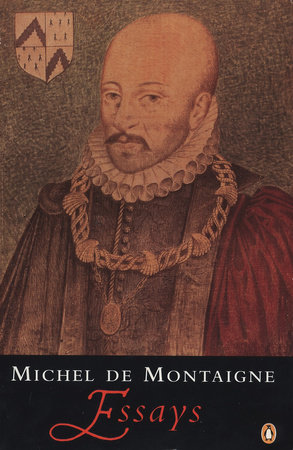
Essays

Introduction by J. M. Cohen
Translated by J. M. Cohen
Paperback
$17.00 US
Penguin Adult HC/TR | Penguin Books
48 per carton
On sale Jul 01, 1993 | 9780140178975
Sales rights: US, Canada, Open Mkt

Celebrated essays from the French philosopher who created a new literary structure

Michel de Montaigne, the creator of the essay form, displays his humane, skeptical, humorous, and honest views, revealing his thoughts on sexuality, religion, cannibals, intellectuals, and other unexpected themes. Included are such celebrated works as "On Solitude," "To Philosophize Is to Learn How to Die," and "On Experience."

Taken together, this selection of essays forms an exquistely drawn portrait that depicts the strength and warmth of Montaigne's personality. And, as J. M. Cohen observes in his introduction, "One sees, as one reads him, how broad his mind was, and how many of the ideas of the next two centuries he grasped by anticipation."
EssaysIntroduction
To the Reader

Book One
7. That our actions should be judged by our intentions
8. On idleness
9. On liars
10. That no man should be called happy until after his death
21. On the power of the imagination
22. That one man's profit is another's loss
26. On the education of children
27. That it is folly to measure truth and error by our own capacity
28. On friendship
31. On cannibals
36. On the custom of wearing clothes
47. On the uncertainty of our judgement
50. On Democritus and Heraclitus
55. On smells

Book Two
8. On the affection of fathers for their children
10. On books
11. On cruelty
17. On presumption
28. All things have their season
32. A defence of Seneca and Plutarch

Book Three
2. On repentance
3. On three kinds of relationships
6. On vehicles
8. On the art of conversation
12. On physiognomy
13. On experience
About

Celebrated essays from the French philosopher who created a new literary structure

Michel de Montaigne, the creator of the essay form, displays his humane, skeptical, humorous, and honest views, revealing his thoughts on sexuality, religion, cannibals, intellectuals, and other unexpected themes. Included are such celebrated works as "On Solitude," "To Philosophize Is to Learn How to Die," and "On Experience."

Taken together, this selection of essays forms an exquistely drawn portrait that depicts the strength and warmth of Montaigne's personality. And, as J. M. Cohen observes in his introduction, "One sees, as one reads him, how broad his mind was, and how many of the ideas of the next two centuries he grasped by anticipation."

Table of Contents

EssaysIntroduction
To the Reader

Book One
7. That our actions should be judged by our intentions
8. On idleness
9. On liars
10. That no man should be called happy until after his death
21. On the power of the imagination
22. That one man's profit is another's loss
26. On the education of children
27. That it is folly to measure truth and error by our own capacity
28. On friendship
31. On cannibals
36. On the custom of wearing clothes
47. On the uncertainty of our judgement
50. On Democritus and Heraclitus
55. On smells

Book Two
8. On the affection of fathers for their children
10. On books
11. On cruelty
17. On presumption
28. All things have their season
32. A defence of Seneca and Plutarch

Book Three
2. On repentance
3. On three kinds of relationships
6. On vehicles
8. On the art of conversation
12. On physiognomy
13. On experience